Routes
Where to ride Uruguay, told slowly — the journeys, and the country they cross.
A route, here, is a story with the logistics inside it: where to start, where to stop, what the wind will be doing while you decide. The rides run from a single day to several, and the telling keeps their pace — no racing, no gear worship, just travel at the speed where a country becomes legible: vegetation shifting as the sea nears, the moment a beach town turns into a neighbourhood.
Start with the scale, because it changes what a trip can be. Uruguay covers 176,215 square kilometres — the second-smallest country in South America, roughly 555 km from north to south. Argentina next door is about sixteen times larger; Chile runs 4,300 km top to bottom. Those are countries you cross a region of. This is a country you can finish. Montevideo to Punta del Este is 127 to 140 km by road, one full day in the saddle. Montevideo to Chuy on the Brazilian border is about 326 km, four or five days for a touring cyclist. Montevideo to Rivera, straight up Ruta 5, is around 505 km — a week, maybe eight days, and you have crossed the whole thing.
The coast is where most people begin. Uruguay has about 660 km of it: some 360 km of Atlantic shore to the east and roughly 300 km along the Río de la Plata, the river-wide estuary that Montevideo sits on. The road that follows the eastern coast is Ruta 10 — 162 km on the map from Canelones to Aguas Dulces in Rocha, threading the beach towns. It is narrow in stretches and not uniformly paved, and it does not pretend to be one unbroken cycleway; treat it as the spine you leave and rejoin. Inland the country is low and rolling. The highest point anywhere is Cerro Catedral at 514 m. There are no mountain passes to plan around. There is wind, which matters more than gradient here, and a month-by-month account of it is the first thing to read.
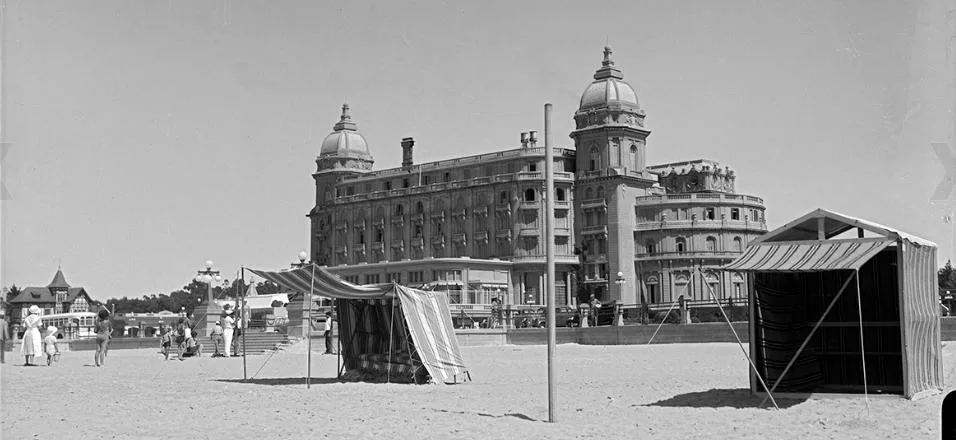
What is here now: a slow ferry across the delta to Carmelo and the quiet west, where the river is wide enough to look like sea; Ester Zaha's Coastal Utopias, a half-day ride reading a century of seaside dreams between Carrasco and Neptunia; the Ciudad de la Costa corridor, the coastal cycleway east of Montevideo that took more than a decade to build; the long Atlantic run from Montevideo to the car-free dunes of Cabo Polonio, in five stages; and Colonia's historic quarter — sixteen hectares of UNESCO-listed cobbles, an hour and a quarter by ferry from Buenos Aires and 174 km from Montevideo along Ruta 1, a road with a wide paved shoulder and a service town every 20 to 40 km.
The interior — sierras, wine country, the emptier north — is next. If you are planning your own trip, read the rules of the road, then the people who have already crossed Uruguay by bike and wrote it down; their second opinion is worth more than ours.