The western gateway
Arriving from Argentina by water — the ferries to Colonia and Carmelo, and the roads east from the river.
For most riders coming from Argentina, Uruguay begins on a boat. The bike goes on with the luggage — Buquebús carries it free on the Buenos Aires–Colonia run, while Líneas Delta, on the Tigre–Carmelo crossing, doesn't publish a bike policy, so it's worth confirming when you book. From the river the roads run east: Ruta 1 with its wide shoulder toward Montevideo, busier with trucks near Colonia, and the quieter Ruta 21 up to Carmelo. ANCAP service stations turn up again and again in these accounts as an informal refuge — water, a bathroom, sometimes a patch of grass to camp on. Two warnings recur: the approach through La Teja and the Cerro has drawn reports of robbery and is best avoided, and the international bridges over the river — San Martín and Artigas — don't let cyclists cross on their own, so riders arrange a lift across by truck. Past all that waits Colonia del Sacramento, and the sense, in account after account, of having reached somewhere calm.
Anyone who wants to keep pulling the thread will find the rest of the western-corridor accounts, sortable by country, language, year or depth; below, five of the most thorough on the western gateway.
Edson Maia — the daily ledger
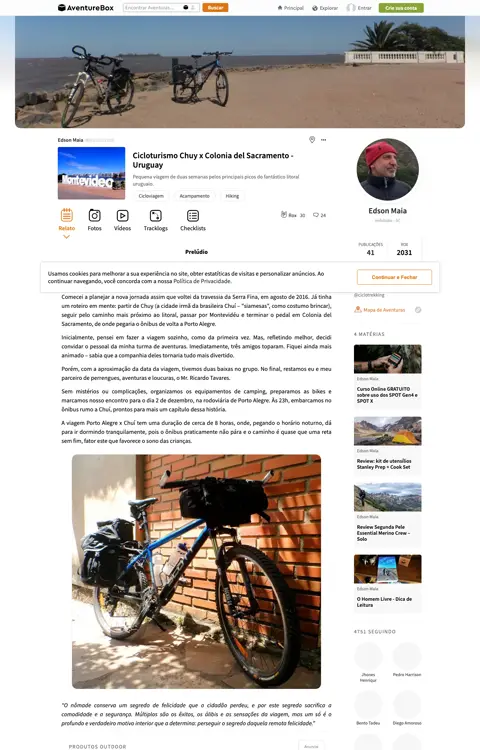
A Brazilian rider's two-week, four-hundred-kilometre coastal tour in December 2016, GPS-tracked and costed to the peso (camping ran two hundred to two-sixty a night). He praises Ruta 10's near-empty off-season traffic and "extremely careful and cordial" drivers, and passes on one piece of hard-won advice: ride into Montevideo on a Sunday to miss the traffic.
Eva Pfarrwaller & Miguel Anjo — on recumbents
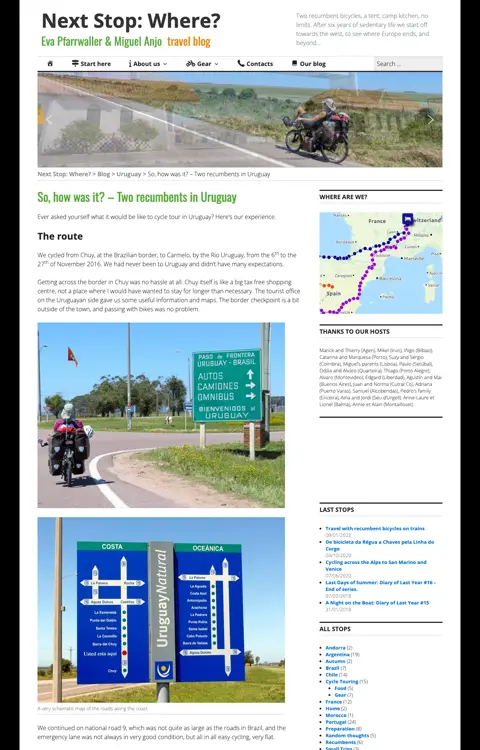
A Swiss couple crossed the country low to the ground, on recumbent bikes, in 2016, from Chuy and Santa Teresa over to Carmelo — comfortable riding, if scenery they found a little monotonous. The value is in the small logistics: where the shoulder's rumble strips will catch you out, that camping rough on public land raises no eyebrows, that stove fuel is sold by the litre, and that you should draw cash before the long gap between Chuy and Castillos.
Kiara Fabbri — Colonia to Montevideo
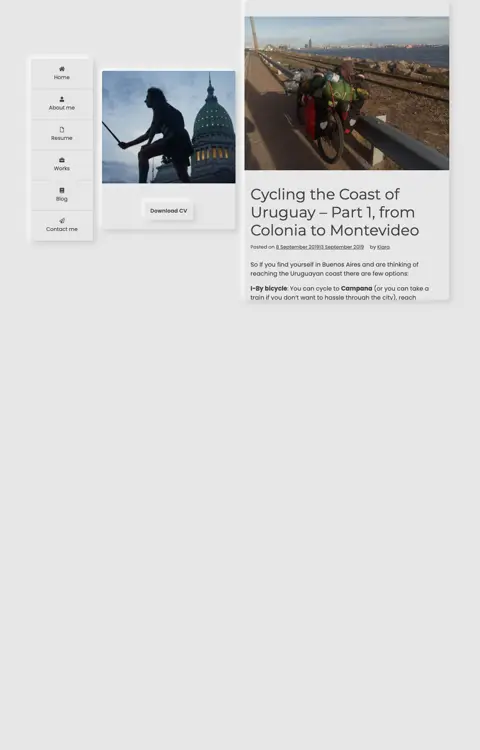
An Italian journalist rode the Ruta 1 corridor in September 2019 and wrote it up with a reporter's eye for the practical: roughly a hundred and eighty kilometres over gentle, rolling ground on a shoulder wide enough to ride, ANCAP filling stations that double as places to wash and sleep, and one warning she states plainly — come into Montevideo any way but through La Teja and the Cerro, where she'd heard of a rider being robbed.
Caryl Bergeron — before GPS
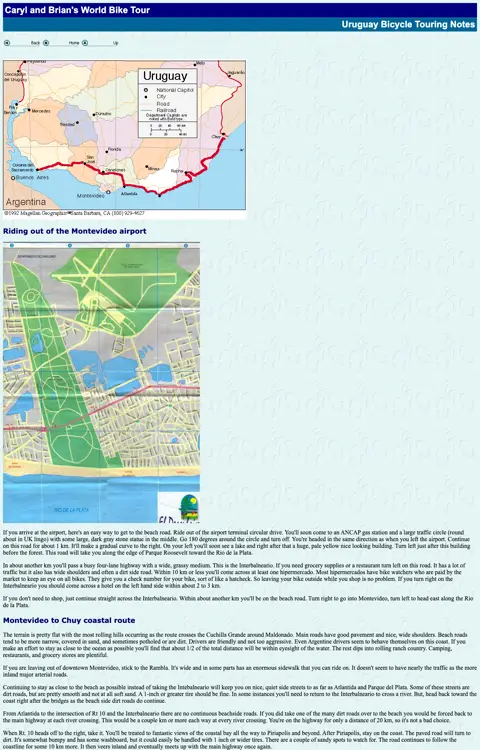
An American cyclist's touring notes from the paper-map era still work as a briefing. The going is easy — the one real climb is the Cuchilla Grande behind Maldonado — and the through-roads give you good tarmac and room to ride, though the tracks out to the beaches want a fatter tyre. Her sharpest warning is reserved for Ruta 1 past Colonia: two lanes, no width to spare, and a steady grind of trucks.
Jime Sánchez & Andrés Calla — a Carmelo weekender
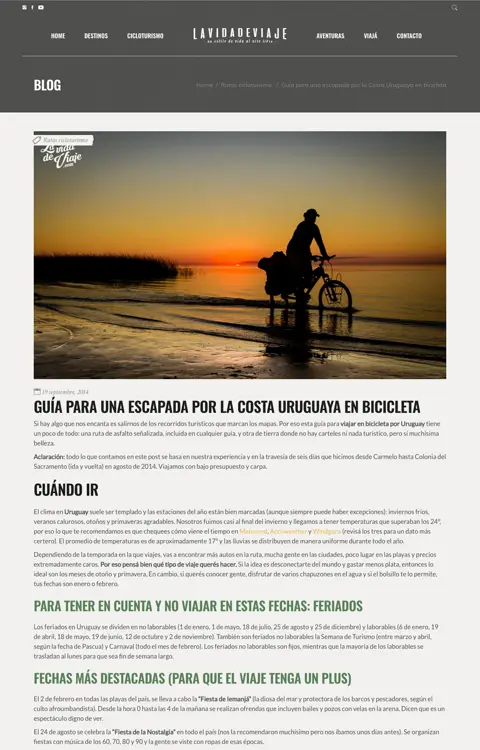
Proof that a Uruguay tour can fit into a long weekend: this Argentine couple spent six days in 2014 on the Carmelo–Colonia loop, roughly seventy-seven kilometres in each direction. The paved leg is level enough for a first-timer; the dirt alternative they rode home is the catch, a surface that stops being a road as soon as it rains. And don't plan that return on what the local tourism office tells you — it steered them wrong.