Topic
Heritage & sightseeing
Uruguay keeps its history out in the open — a riverside promenade, an art deco tower, two World Heritage Sites. A bicycle is the right speed to take it in.
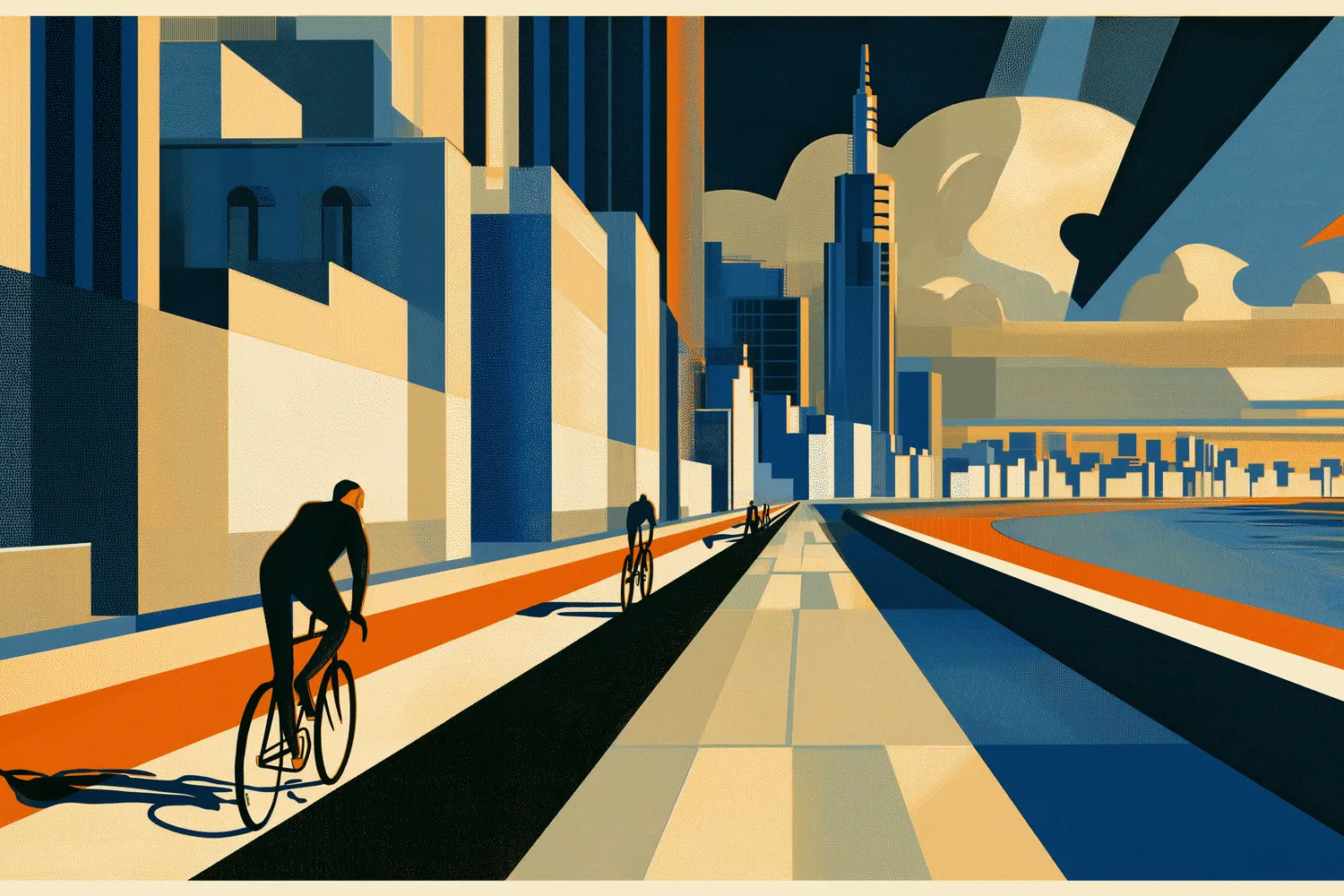
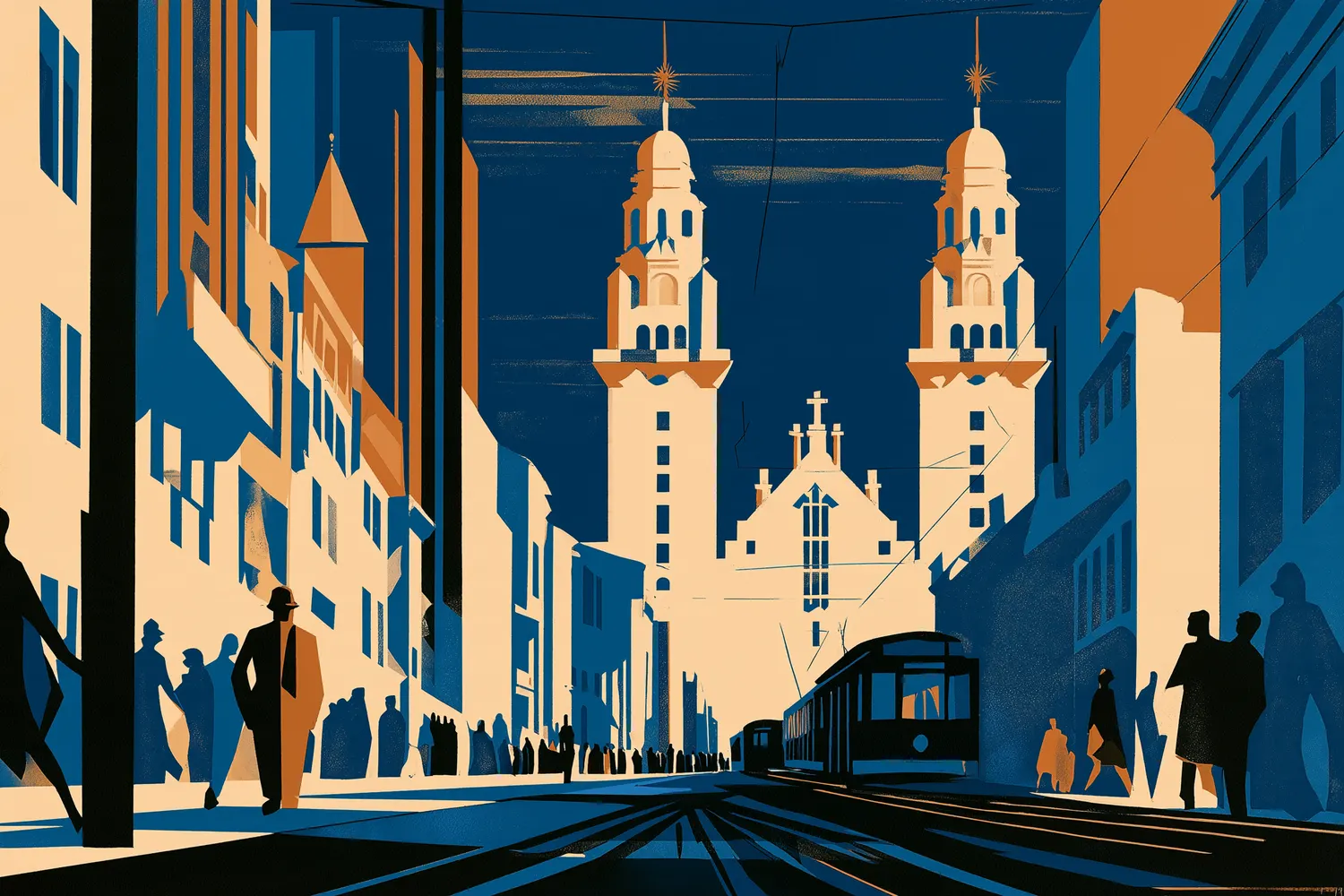
The rambla — Montevideo's waterfront promenade — took three decades to build, section by section, until the Rambla Sur completed the loop in 1935. The customs-house tower above the port was art deco before the style even had a name: its design came out of a 1922 architecture competition. West along the coast, the historic quarter of Colonia del Sacramento has been a UNESCO World Heritage Site since 1995, and the former Anglo meat-packing plant at Fray Bentos joined the list in 2015 as an industrial landscape.
That promenade accumulated rather than arrived. Parque Rodó got its stretch around 1906. The 1910s did most of the work: Pocitos in 1910, Punta Carretas six years after that; Carrasco in 1912; Malvín and Punta Gorda in 1918. Buceo waited until 1925. Only the Rambla Sur remained, and it proved the expensive one: four kilometres, fifty metres across, 929 properties expropriated to clear the ground. Work began in 1923, a storm undid it, and the rebuilt scheme — engineered by Juan P. Fabini — did not open until December 1935. The ground it took was not empty. Playa Santa Ana and Playa Patricios vanished under the works, and the poor shoreline neighbourhoods behind them — the district the city knew as El Bajo — were cleared to make it possible.
Three buildings carry most of the rest. The Mercado del Puerto has stood since 10 October 1868, and for a century it did ordinary work — a produce market, not a destination — until the 1970s turned it into today's grill hall, the one visitors queue for. Liverpool foundries manufactured its iron frame, and it was assembled on arrival. Nearby, Jorge Herrán won the 1922 competition for the customs house against eighteen other entries, aged 26, and saw the building finished in 1931 — Paris would not name the style until 1925. Inland on 18 de Julio, Mario Palanti's Palacio Salvo topped out at 101 metres in 1928; for a time nothing in Latin America stood higher.
Not all of it is rideable — Colonia's sixteen cobbled hectares are best walked, bike parked at the gate. The Calle de los Suspiros has actual steps. The Portuguese founded the town in 1680, which is why its street plan argues with everything built after it. Montevideo's colonial core asks for the same treatment: Ciudad Vieja has no cycle lane anywhere inside it, and the whole grid is a 30 km/h shared-traffic zone. Arriving on the protected network and getting off at the edge is the honest way to do it. But getting there, and threading the rest together, is where the bicycle earns its place: short distances, flat streets, and stories that unfold at riding pace.
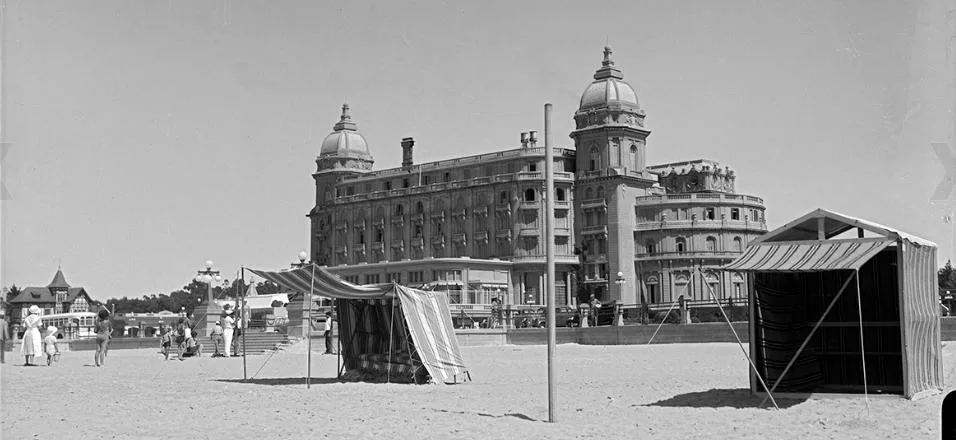
This page gathers everything we've published around that side of Uruguay — how the street changed owners when the car arrived, the coast's utopian settlements, the countryside around Carmelo, and the rambla then and now.