Topic
Historic sites
The city's photographers have been documenting Montevideo since the 1910s. What the plates keep showing is a city in the middle of deciding something.
The record came first. Montevideo's municipal photographers have been documenting the city systematically since the second half of the 1910s, and what their plates keep catching is a city partway through a decision. The promenade that looks permanent, the pedestrian street that looks inevitable, the market that looks like it was always somewhere to eat — each is the outcome of a specific, dated, argued-over choice, and each looked settled at the time it was made. The pedestrian core of Ciudad Vieja is the clearest case: it began as a 1992 pilot that the shopkeepers along it fought, and ended with those same shopkeepers asking for more of it. These pieces work backwards from the photograph to the decision behind it.
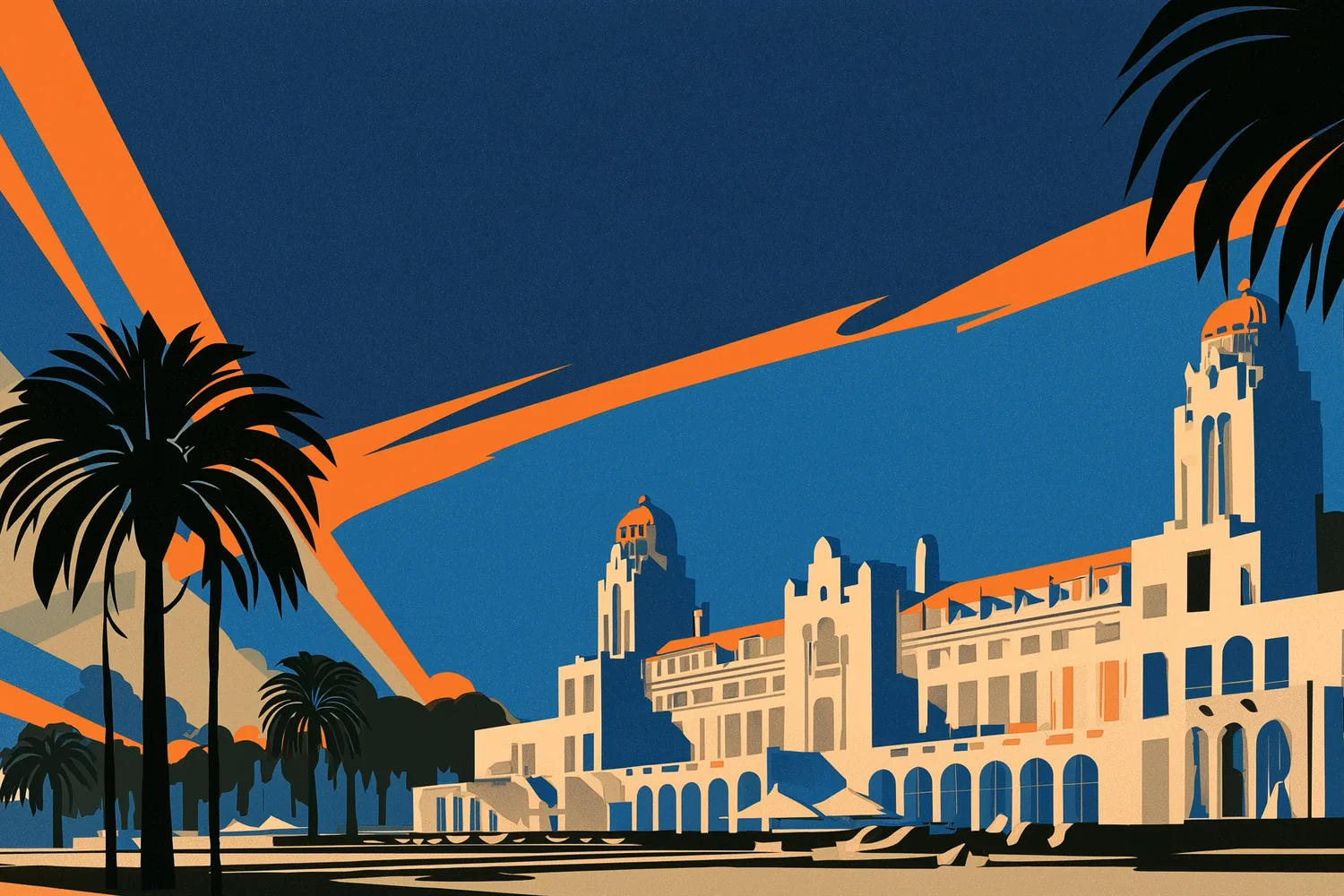
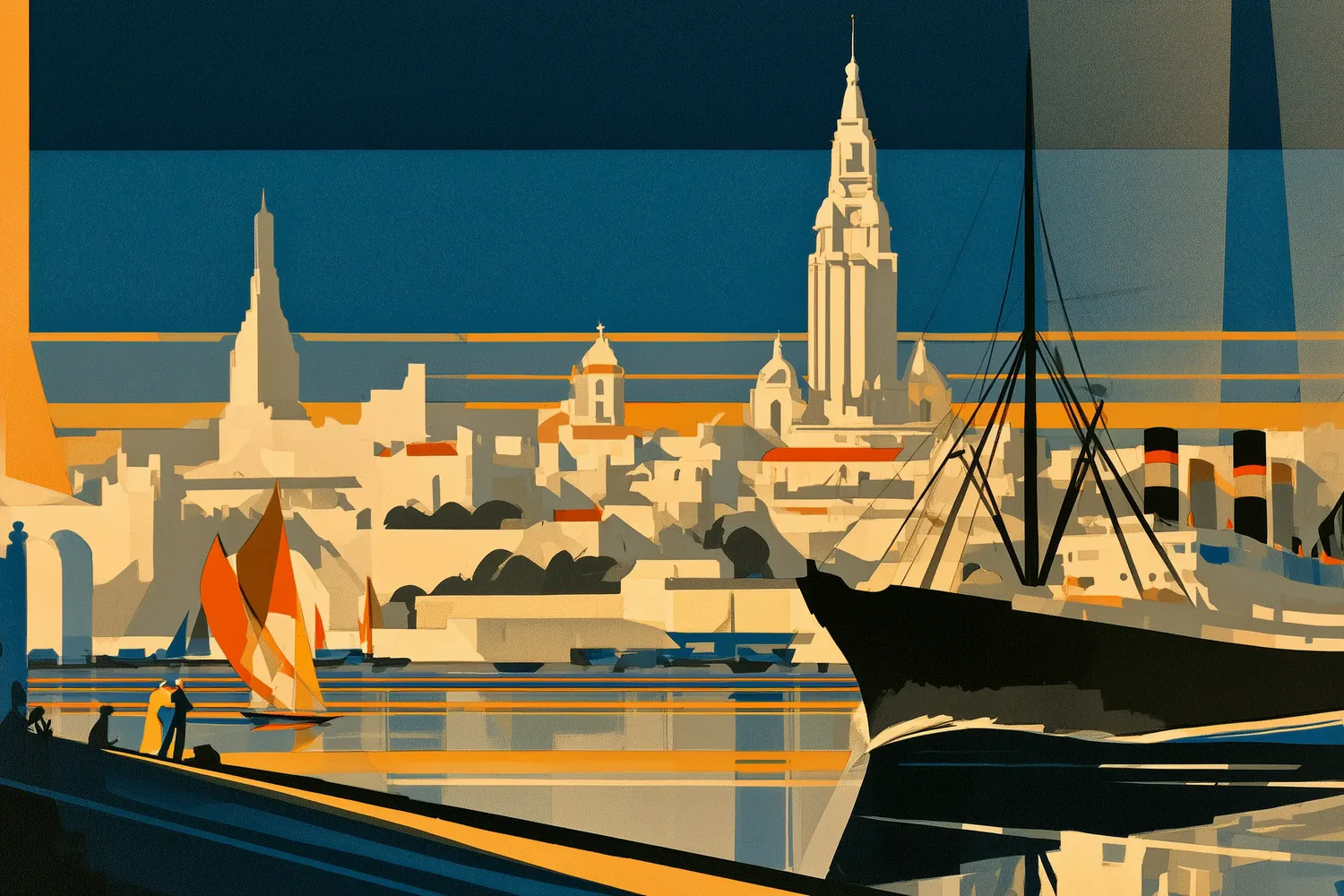
A second pattern is stranger: the building arrives and the city turns up later. A photograph from 1921 shows the Hotel Carrasco standing by itself on open sand — a resort hotel at the centre of a neighbourhood that had been drawn on paper nine years earlier and would take decades to fill in around it. The city's coastal road reached it thirty-one years after it opened. The port has the same shape at a larger scale: built between 1901 and 1909 under a national law and a French contract, finished before the Montevideo that now depends on it, and inaugurated on a morning when the steamer Colombia was wrecked coming into the new basin before dawn, with lives lost. The ceremony went ahead. The Mercado del Puerto inverts the pattern — it spent a hundred years being precisely what its name says, a wholesale market for produce and meat, and became a destination only afterwards. Its twin across town, the Mercado Central — designed by the English architect Thomas Havers and opened six months later — was pulled down in 1966.
The slowest change was the one nobody announced. Cars made up 0.39% of Montevideo's counted traffic in 1905 and 9.76% by 1916; 700 were registered in 1912 and 45,000 twenty years after that. The roadway that trams, carriages, carts and pedestrians had simply shared was divided up across those decades, and an exhaustive search of the period's press turned up no campaign to explain it — no Uruguayan counterpart to the American push that produced the word jaywalking. Ordinance, habit and accumulation did the work instead, and they never entirely finished it. Worth noting who organised first: the national cyclists' club was putting tool boxes at rural stops in December 1904 and won authorisation for a road-signage system in November 1905, while the Automóvil Club del Uruguay was not founded until June 1918. Cyclists were a road-use lobby more than a decade before motorists were.
Two beaches are missing from this coast. Santa Ana and Patricios went under the landfill that produced the Rambla Sur, together with the whole Bajo district behind them and streets — Yerbal, Recinto — that simply stopped appearing on maps of Ciudad Vieja. That is the cost side of the same decades the port and the hotel are told as achievements, and these pieces do not reconcile the two readings; they keep both. The riding is uneven in the same honest way. Of the promenade's 22.2 kilometres, roughly 7.7 are separated from traffic — a 4.7-kilometre cycleway laid on the roadway in September 2024, plus about three kilometres of older pavement-side bicisenda — while the 14.5 kilometres running east from Prefectura de Pocitos to Arroyo Carrasco have nothing at all.
Most of it is rideable anyway. The stretch from Ciudad Vieja to Pocitos strings the customs house, the Dique Mauá, the southern landfill, the 2024 cycleway and the Punta Carretas lighthouse into a single afternoon, potholes and all. The far end of this collection is not in Montevideo at all: the ride out to Carmelo, some 250 kilometres upriver in Colonia department, trades the archive city for crushed-shell roads and river-country wineries. All of it rests on one municipal archive, the Fondo Municipal Histórico at the Centro de Fotografía de Montevideo, whose first tranche of images went public in March 2020 — which is why a century of this city can be looked at rather than only read about.