
Berlin, where shared mobility runs its experiments
Four scooter brands, electric mopeds, subscription bikes and free cargo bikes share the same blocks. Notes from Europe's testing ground for micromobility — and on the city that counts it all.
Step off the train in Berlin and the first thing you notice is how many ways there are to not own a vehicle. Four licensed scooter operators — Bolt, Dott, Lime and Voi — work the same blocks as Emmy's electric mopeds and the monthly subscription bikes of Swapfiets, and alongside them rolls the fLotte, a volunteer network backed by the ADFC cyclists' federation that lends cargo bikes for free. The city Senate keeps the official count: as of April 2026, 74,060 rental two-wheelers across eight companies.
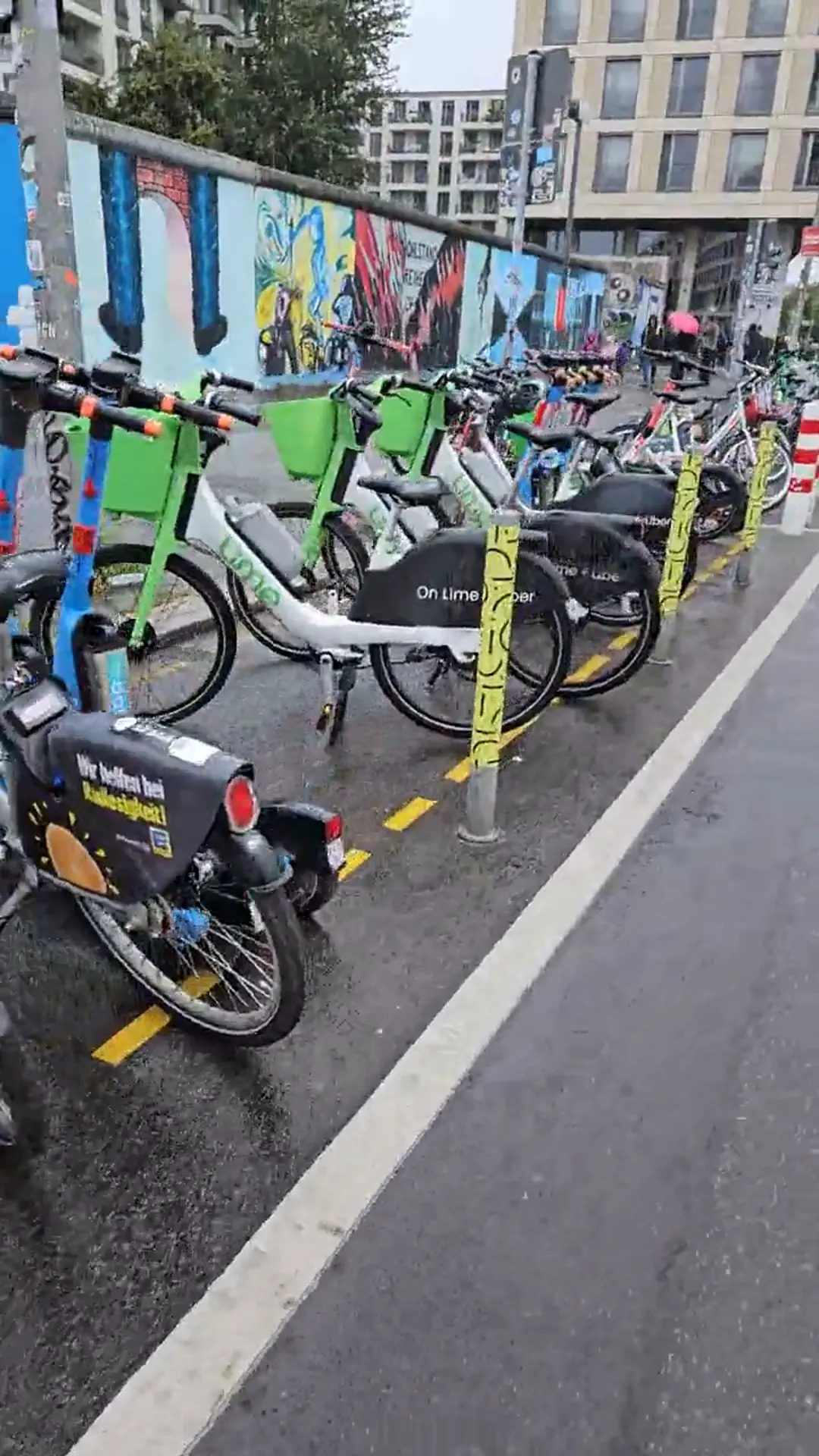
None of this was designed. It is what a decade of trial and error left standing. Deutsche Bahn's Call a Bike, one of Europe's earliest bike-share systems, has been rolling since 2000. The dockless wave of 2017 — Mobike, Ofo, oBike — left almost as fast as it arrived, leaving abandoned bikes on the sidewalks of several German cities. When Germany legalized e-scooters in June 2019, a queue of companies stood ready to launch, two of them Berlin startups. Then came the shakeout: Tier, once valued at two billion euros, merged into Dott in 2024. Bird, the American operator, left Germany at the end of 2022, returned in the summer of 2025, and was gone again by early 2026.
What makes Berlin worth studying is not the abundance. It is the refereeing.
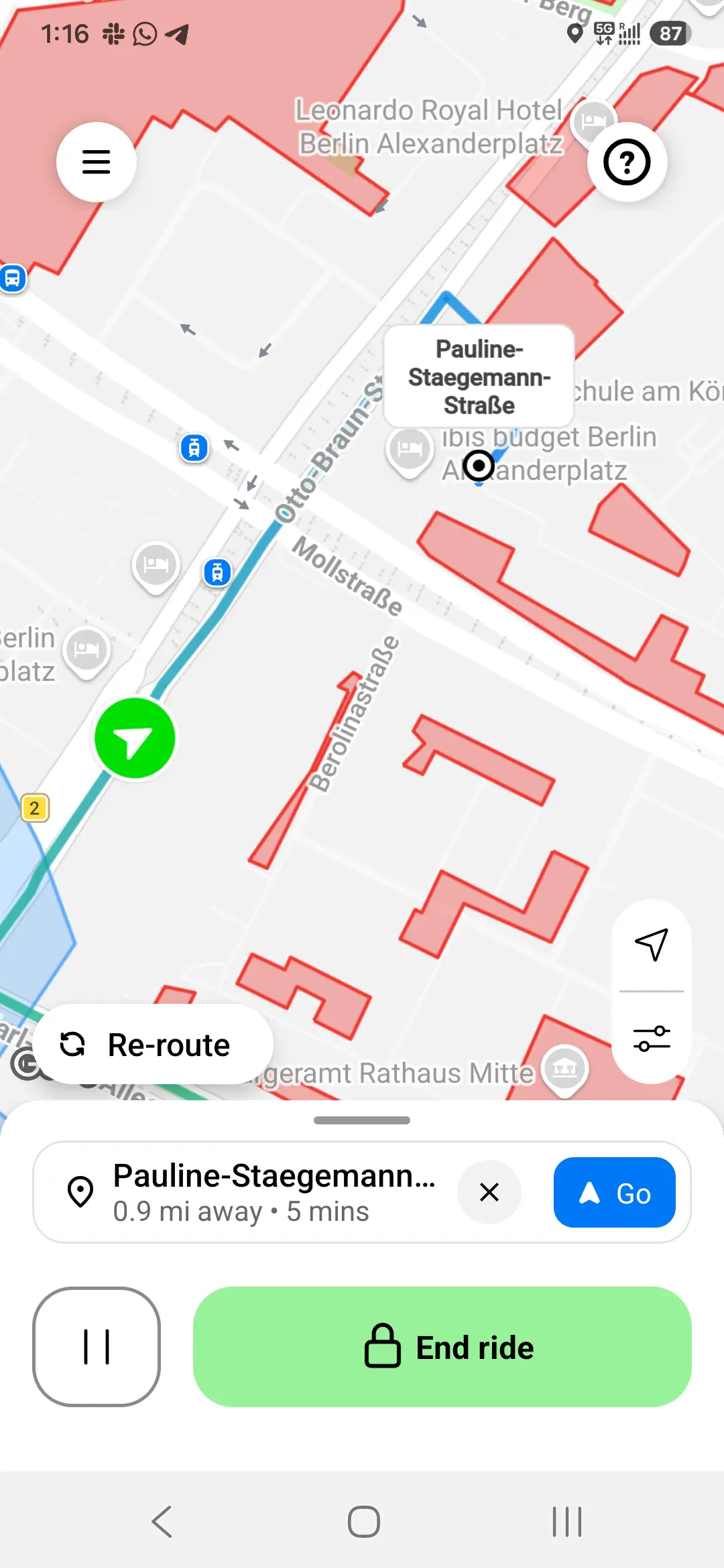
BVG, the public transport authority, answered the app sprawl with an app of its own: Jelbi bundles trains, buses and the private fleets in one place — some 400 mobility hubs, more than 60,000 vehicles and around seven million trips since 2019, by BVG's own six-year tally. Since 2024, a cap of 19,000 holds scooters inside the S-Bahn ring, the commuter-rail loop around the city's inner core, and every vehicle there pays monthly rent for the public space it occupies: three euros for a scooter, fifty cents for a cargo bike. The fee schedule is policy by other means. There are 565 marked parking zones, towing comes out of the operators' pockets, and in January 2026 a court ordered Nextbike's roughly 6,500 bikes off the streets after its public contract lapsed — here, even the subsidized system competes for its permit.
The Senate's own data keeps the enthusiasm honest. Scooter trips average 1.6 kilometers and six and a half minutes, and the city openly doubts how many of them replace car trips.
I ride Montevideo every day, and I spent my days here doing the conversion in my head. Berlin's lesson is not the fleet — it is the method: let them try, count everything, charge for public space, adjust. On the street, the result is plain. Not owning a car is the easy choice, not the committed one.
- "Umweltbildung." Bezirksamt Friedrichshain-Kreuzberg — the district's official page: confirms fLotte and its partner organizations lend cargo bikes "kostenlos" (free of charge), and identifies fLotte as an ADFC Berlin initiative. Visit the site. Accessed Sep 17, 2026
- "Jelbi — everything in one place." BVG/Jelbi — the official app bundling buses, trains and private shared-mobility fleets across Berlin. Visit the site. Accessed Sep 17, 2026
- "Ordnung im Berliner Sharing-Chaos: positive Bilanz nach sechs Jahren Mobilitätsapp Jelbi." entwicklungsstadt.de — Jelbi's six-year tally per BVG's own year-end whitepaper: over 1.2 million downloads, more than seven million trips since 2019, roughly 400 Jelbi hubs and more than 60,000 bookable vehicles. Visit the site. Accessed Sep 17, 2026
- "Maximal 19.000 Fahrzeuge im Zentrum: Berlin begrenzt erstmals Zahl der E-Scooter." Der Tagesspiegel — the cap of 19,000 e-scooters inside the S-Bahn ring, in force since 2024. Visit the site. Accessed Sep 17, 2026
- "Finale Gerichtsentscheidung: Nextbike muss alle Leihräder von Berlins Straßen entfernen." Der Tagesspiegel — the Berlin-Brandenburg Higher Administrative Court's final ruling ordering roughly 6,500 Nextbike bicycles off the streets after its public contract lapsed. Visit the site. Accessed Sep 17, 2026
- "Bericht SenMVKU – IV A 1." Senate Department for Mobility, Transport, Climate Protection and Environment — official report to the Berlin Abgeordnetenhaus (June 2, 2026): the 74,060-vehicle count across eight companies (as of April 2026), the full public-space fee schedule, the 565 marked parking zones, and quarterly usage data (1.6 km and 6.5 minutes average per scooter trip). View the document. Accessed Sep 17, 2026
The photos and video in this piece are our own reporting, taken in Berlin between August 18 and 22, 2026.