
Montevideo's first bicycle boom
In 1899, a city of tram lines and horse carts imported seven hundred and forty-six bicycles in a single year — then watched the number crash. Clubs, tracks, a moral panic, a tax fight won in parliament: the social history of Montevideo's first cycling fever, and of the surprisingly modern ideas it left behind.
Start with the customs ledger. Fewer than a hundred bicycles a year entered Uruguay through 1898. Then 1899: 746. Then the slide — 567, 352, 304, 191 — until the figure settled back around a hundred by 1904. That is not a trend; that is a fever chart. Around its peak a small commercial ecosystem sprang up at addresses you can still walk past: De Michelis selling on Juncal, Volonté on Figueroa, the Malugani y Zanetta workshop on Convención, Franquiz doing repairs on Colonia. The club's own bulletin began recording bicycle thefts in the same window — the surest sign a machine has arrived. By 1900, one historian counts some twenty-five velodromes in all of South America. Three were Uruguayan.
How it started. The earliest press mention found so far — per a recent academic survey — is small: a note on "velocipedismo" in El Siglo, 28 April 1892. The machine had beaten the newspapers to it — a first cycling organisation, the Escuela y Sociedad Velocipedista del Uruguay, had existed since 1888, before customs even bothered counting bicycles. Period accounts keep returning to one image: bystanders edging up to touch a parked bicycle, the way you'd approach an unfamiliar animal.
The clubs. First the Club Nacional de Velocipedistas, founded 20 July 1890 — in time it acquired statutes and a uniform of its own. Then, in 1898 and 1899, the wave: Club Ciclista Uruguayo, Veloz Club Español, Unión Velocipédica Uruguaya, Firefly Club. By the independence-day parade of August 1899, cyclists marched as an institution.
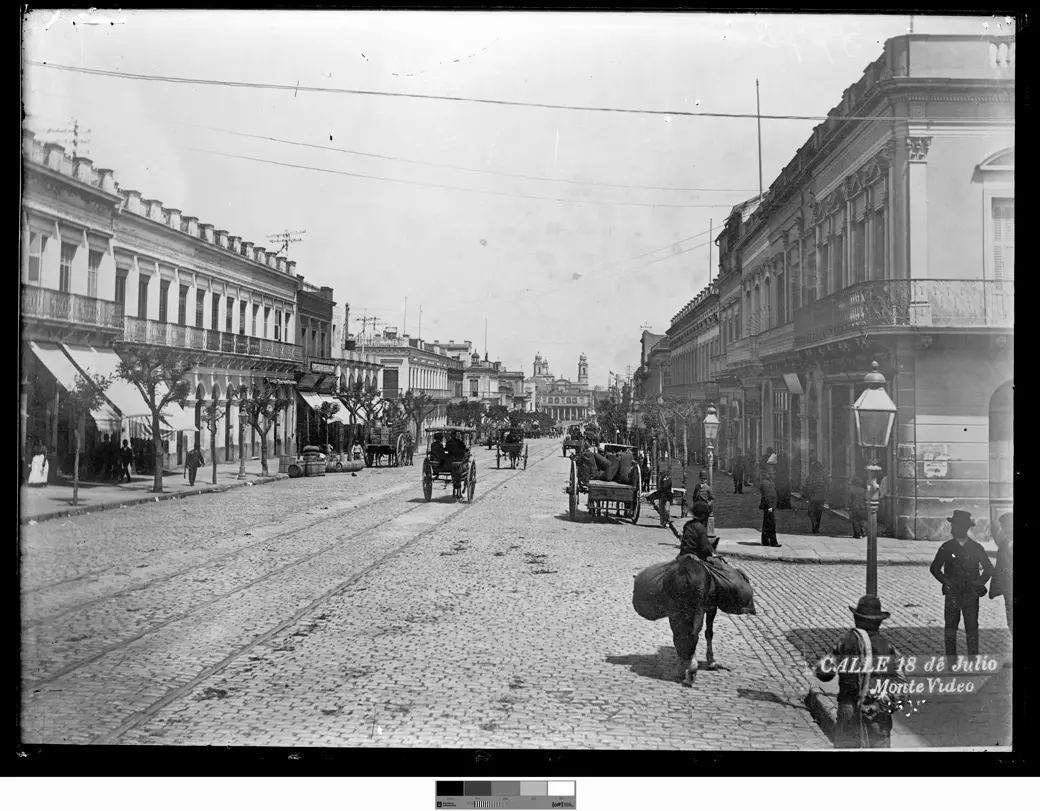
The tracks nobody photographed. Montevideo built its velodromes fast and lost them faster. The first, La Aguada, opened in 1895 on Calle Miguelete. The Uruguayo followed near the Hospital Italiano. Arroyo Seco — the one that ended up in film history, because Uruguay's first movie was a short documentary of a bicycle race shot on its track (whether in 1898 or after 1901 is a live scholarly argument, preserved here as such) — opened on Agraciada in 1901. Count them as three, or as four: the sources genuinely disagree about whether the Platense was a separate track or the Aguada venue's operating club. What they shared is better documented than what they numbered: wooden construction, private money, and a lifespan pegged to the fever. By 1903, three had been demolished. None was ever photographed for the municipal archive — the boom predates the city's systematic camera by over a decade.
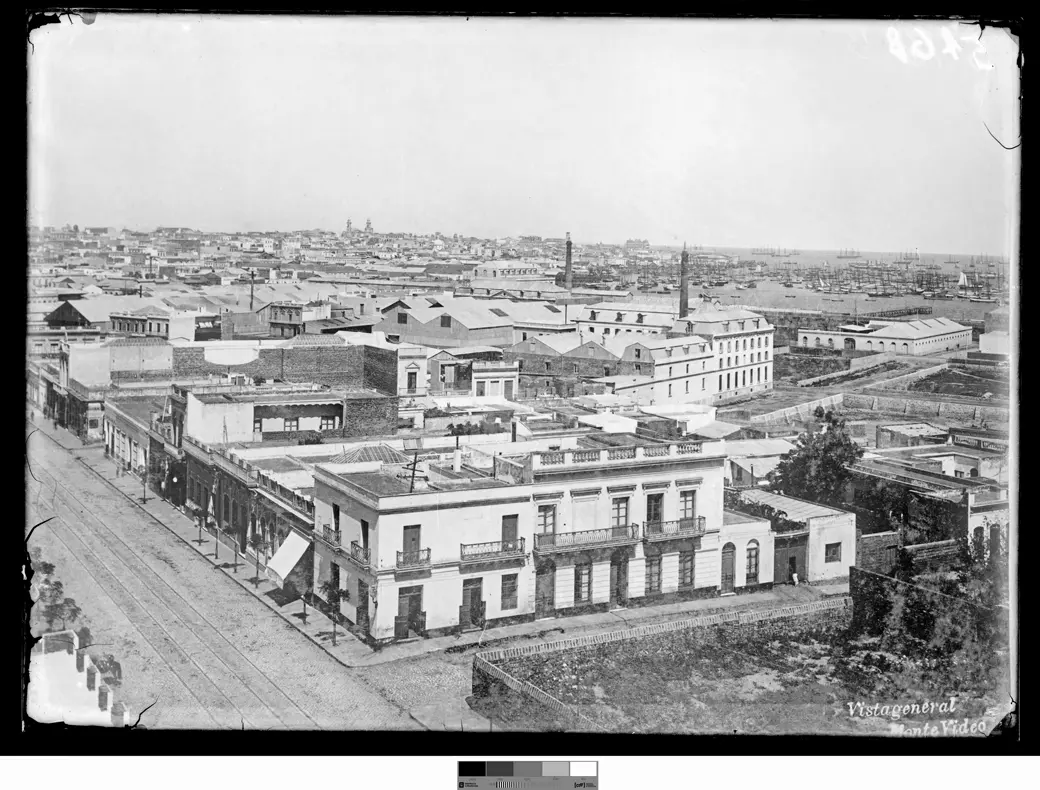
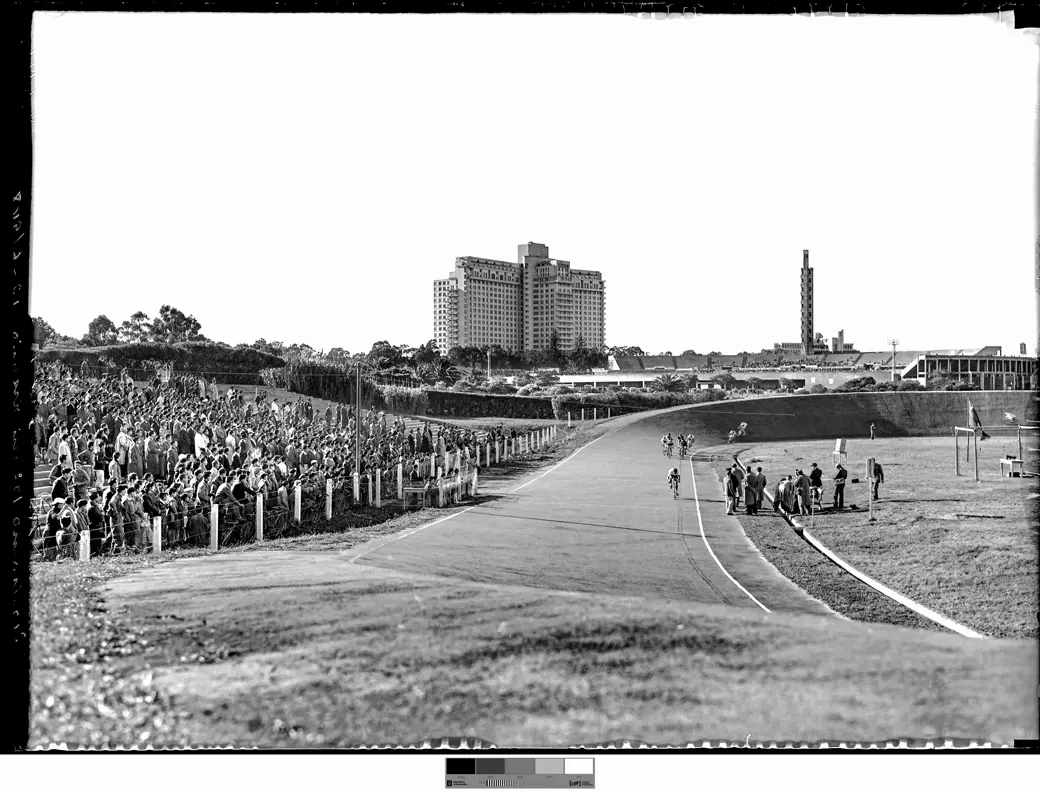
It took thirty-five years to replace them. A 1930 centenary design competition chose a project by Dyckenhoff y Widmann — budget 35,299 pesos — and promptly shelved it for lack of funds; construction began in 1935, and the Velódromo Municipal opened in Parque Batlle in 1938, surrounded by an institutional skyline the old boom would never have recognised.
Two months' wages, and a ruling that said otherwise. A new bicycle cost 30 to 36 pesos against a factory wage of about 20 a month — so the first Montevideo cycling was, in practice, a pursuit of merchants, professionals, Italian immigrant traders: people with money and time. Hold that fact against this one. When the city proposed a two-peso annual bicycle licence in 1906, the Club Nacional de Velocipedistas took the fight to the national Chamber of Representatives and won — and the Chamber's ruling of 6 October 1906 called the bicycle "a useful, economical means of transport for the working classes." Elite practice; working-class argument. Both are in the record, and the contradiction may be the most honest picture of the boom — unless the ruling was simply early, and saw what the bicycle would become.
The scandal, in one paragraph. The complaints were gendered in both directions: cycling men stood accused of betraying their "Creole virility," while cycling women received a label all their own — "amazons." Time loosened both prejudices. The women's half of that story is bigger than one paragraph, and it isn't this one's to tell.
The club that turned into a road lobby. The boom's most modern legacy happened nowhere near a track. From December 1904 the CNV installed free-for-members toolboxes at rural stops — the first at the Confitería Ribot in Paso del Molino, inventory itemised down to a 130-gram first-aid kit. In November 1905 it won authorisation from Montevideo's economic administration board for a distance-sign system — 60-by-40-centimetre enamelled iron plates, copied from the Touring Club Italiano and its 1,350 signs — and separately negotiated pole-mounting rights with the national telegraph company. Donors funded it: give more than five pesos and you chose where your sign went. Nineteen were standing by 1909, the year the club renamed itself the Touring Club Uruguayo and wrote down its philosophy of the road: to ride the country "at twelve kilometres an hour." A century on, the idea has a shorter name: cycling slowly.
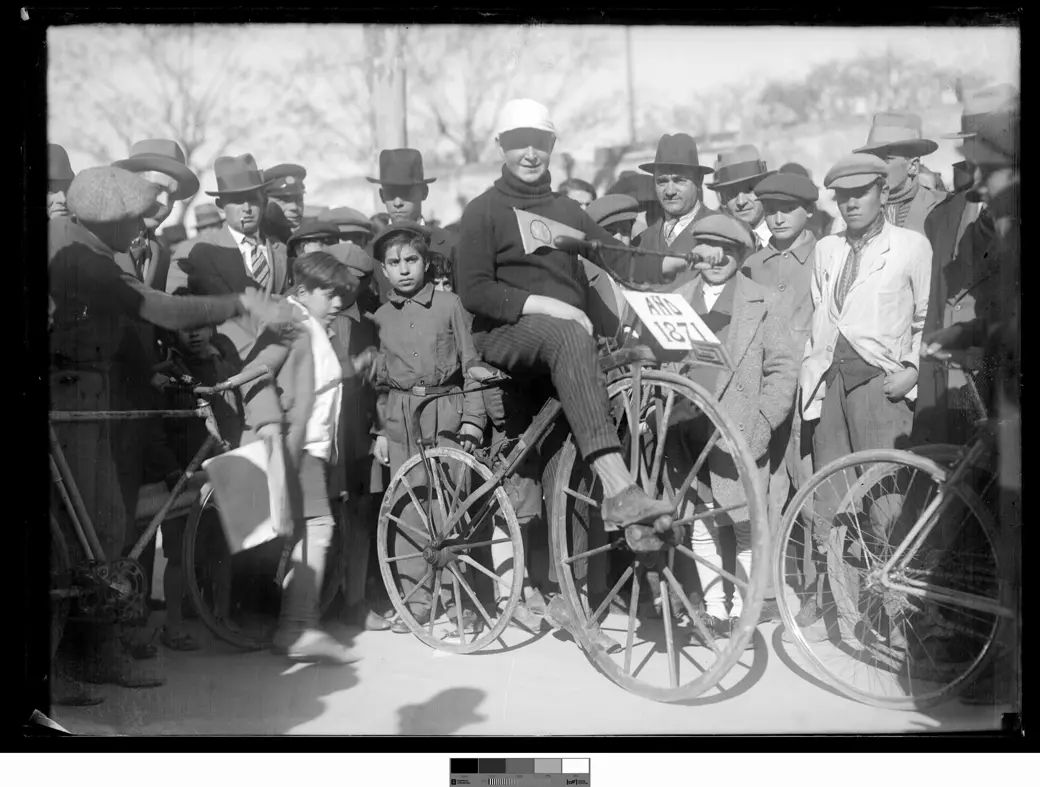
By 1930 the Fiesta de la Locomoción was exhibiting a "bicycle of the year 1871" — the catalogue's own label — as a museum piece. The fever had lasted a decade, and within a generation it already read as ancient history. What never aged was the rest: signs on the road, toolboxes at rest stops, the notion that getting around by bicycle deserved a public defence. The fever passed. The idea is the part that stuck.
- Gambetta, E. & Leitón (2016). Unibici (Universidad de la República) report on the history of the bicycle in Montevideo — the 1898-1904 import curve, shop addresses, the 1906 licence-tax ruling, the toolbox and road-sign programmes, and the 1930 velodrome design competition. Read the report (PDF). Accessed Aug 1, 2026
- Pertussatti, N. (2025). "Primeros pedaleos en Uruguay: de la bicicleta al ciclismo (1890-1900)." ISEF/Universidad de la República conference paper (Ensenada, Oct. 2025) — the 28 April 1892 El Siglo mention. Read the paper. Accessed Aug 1, 2026
- Brown, M. (2021). "Cycling in South America, 1880-1920." Anuario Colombiano de Historia Social y de la Cultura (Universidad Nacional de Colombia) — the continental velodrome count around 1900 and the dating dispute over Uruguay's first film. Read the article. Accessed Aug 1, 2026
- Gambetta Sacías, E. (2020). "Turismo en bicicleta en el Montevideo de principios de siglo XX. El caso del Club Nacional de Velocipedistas (1904-1909)." Claves. Revista de Historia (FHCE, Universidad de la República) — the discrepancy over whether the Platense ran its own Punta Carretas track or operated the Aguada venue. Read the article. Accessed Aug 1, 2026
- CdF record 0877FMHB — Avenida 18 de Julio from the corner of today's Julio Herrera y Obes, 1895. Read the record. Accessed Aug 1, 2026
- CdF record 0546FMHB — Barrio La Aguada, 1892. Read the record. Accessed Aug 1, 2026
- CdF record 08306FMHGE — Velódromo Municipal in Parque Batlle, 1948. Read the record. Accessed Aug 1, 2026
- CdF record 0150FMHD — "bicycle of the year 1871," Fiesta de la Locomoción, 24 August 1930. Read the record. Accessed Aug 1, 2026
All four photographs are public-domain (CC0) records from the Centro de Fotografía de Montevideo (CdF), Fondo Municipal Histórico.