
Is Montevideo safe to cycle?
The short answer is yes — with a map in your head. Montevideo is one of the calmer capitals in the Americas to ride, but its protected network is still a work in progress. Here is where you can relax, and where to pay attention.
Yes — for most visitors, most of the time, Montevideo is an easy and unintimidating city to ride. It is flat, it is slow, and over the past few years it has laid down a spine of protected lanes along exactly the routes a visitor is most likely to want. What it does not yet have is a complete network: the protected sections are real, but they stop and start, and knowing where they do is most of what keeps riding here pleasant.
Most of what makes the city comfortable on a bike, though, has little to do with bike lanes. The traffic is slower than in a big northern city, the drivers are unhurried, and there is none of the entrenched hostility between cars and bikes that riders know from London or Paris. The thing you watch for is the occasional distracted driver, not an aggressive one. For a nervous cyclist, Montevideo tends to feel a notch calmer than expected rather than more frightening — though what the law actually asks of you, and why the calm has so little to do with it, is worth reading before you go.
Three stretches carry most visitors. The waterfront — the Rambla — is the signature: a protected lane from the old port out to Pocitos, flat and separated from traffic almost the whole way. Down the commercial spine of the city, a lane fenced off with bollards runs the length of 18 de Julio, from the Obelisco to the edge of the old town — the easy way to cross the centre.1 And on the eastern edge, across the departmental line into Canelones, a path set apart from the road runs for some twelve kilometres along the coast toward El Pinar.2 On all three you can ride without thinking much about cars.
The gaps matter as much as the lanes, because the network does not yet join up. The largest one for a visitor sits at the end of that waterfront ride: east of the naval prefecture in Pocitos the protected lane runs out, and the Rambla through Buceo, Malvín and Carrasco is shared with traffic until the Canelones path begins. It is rideable, and Montevideanos ride it daily, but it is not where a first-timer should start. The west of the city is the other blank — the approach from the Cerro has no protected route yet, only one now being built.3 Off the main corridors the marked network thins out, and you fall back on the quiet residential streets the city has in abundance — though Montevideo is steadily building the network outward, corridor by corridor.
The shape of it is easiest to see laid flat. The protected corridors stand out; the gaps do too.
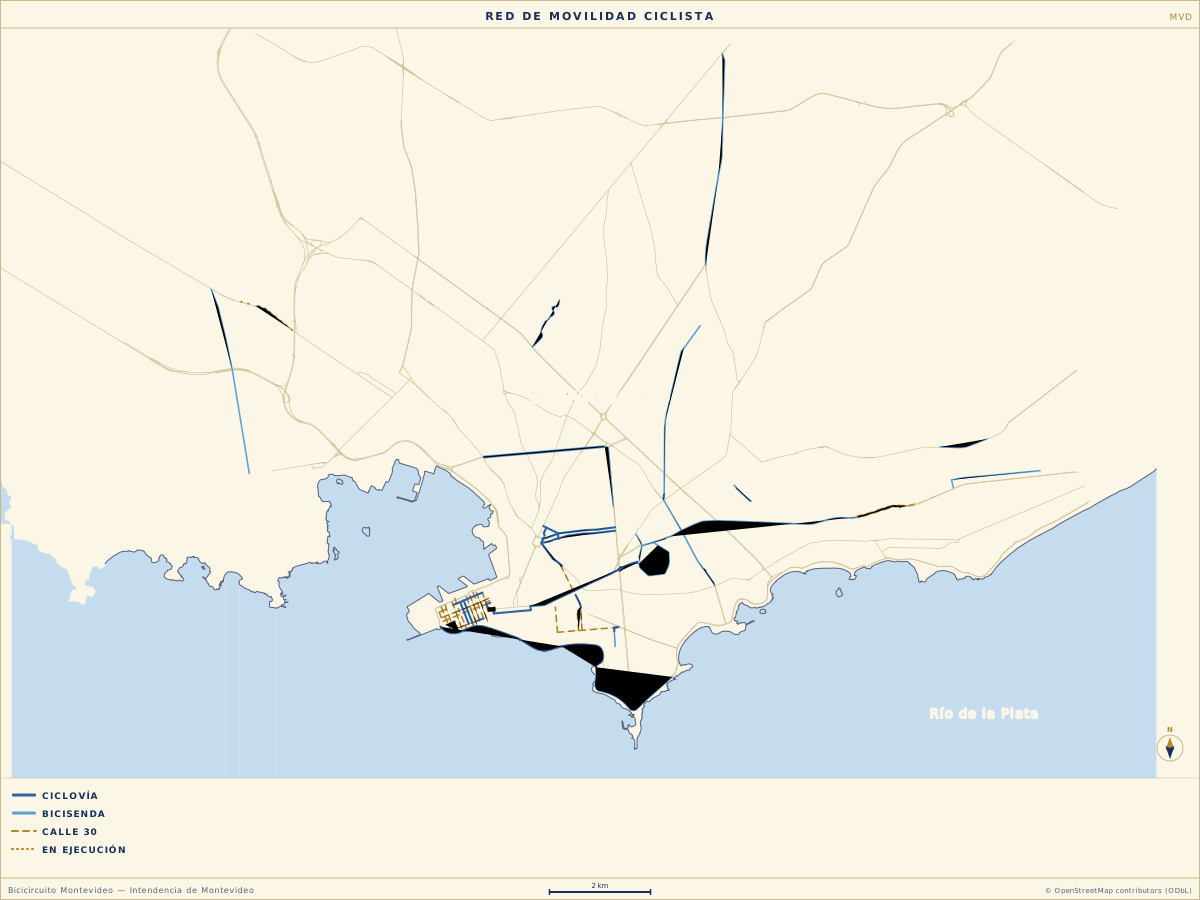
Network data: Intendencia de Montevideo.
So, a few practical things. Begin on the Rambla or on 18 de Julio, where the protection is real and continuous, and use them to find your feet before you take on any shared road. Plan around the gaps rather than straight through them — it is perfectly fine to ride the unprotected Rambla east, as long as you know that is what you are doing. Carry the basics — a helmet, lights for after dark, a bell — and treat the city the way Montevideanos treat it: there is no hurry here, and the riding is better for it.
If you are bringing your own bike or hiring one when you arrive, when to come is the next thing worth settling. The riding itself is simple enough: start on the Rambla, keep to the protected lanes until the city feels familiar, and let it open up from there.
- Intendencia de Montevideo. Quedó inaugurada la ciclovía de la avenida 18 de Julio. montevideo.gub.uy, 21 Dec 2023.Accessed 17 · JUN · 2026
- Intendencia de Canelones. Nuevo tramo del paseo costero conecta Canelones y Montevideo. imcanelones.gub.uy, 14 Nov 2025.Accessed 17 · JUN · 2026
- El Observador. Intendencia de Montevideo comenzará este año la construcción de la ciclovía al oeste que unirá el Cerro con 18 de Julio. elobservador.com.uy, 4 May 2026.Accessed 17 · JUN · 2026